

A blackout becomes much more stressful when the refrigerator, Wi-Fi router, sump pump, and work laptop all need attention at once. A home backup power station gives you quiet battery power for essential devices, but output, capacity, charging speed, and switchover time determine whether it truly fits your emergency plan.
This guide compares the best power station for home backup across compact units, high-capacity systems, and a fuel-powered alternative for extended outages. If power loss could interrupt a home server, our guide to NAS hard drives for dependable storage can help you strengthen the data side of your preparedness plan, too.
Quick answer
This guide compares 10 picks, with UDPOWER S1200 Portable Power Station 1200W Pure Sine ranked first. Jackery Explorer 1000 v2 Portable Power Station holds the highest customer rating among them. Jackery Explorer 300 Portable Power Station 292Wh has the most customer reviews.

Pros
- Exceptional battery longevity with LiFePO4 chemistry rated for thousands of cycles versus hundreds in competitors
- Five AC outlets provide significantly more charging flexibility than typical 2-3 outlet models in the class
- Fast 1.5-hour charge time keeps downtime minimal during emergencies
- Reliable UPS function switches power in less than 0.01 seconds to protect connected devices
- Works reliably in extreme temperatures from -4°F to 140°F for diverse climates and seasons
Cons
- 25.8-pound weight requires two hands for carrying and limits portability for solo transport
- No reviews available yet, so real-world user feedback and longevity validation are not yet established
- Solar panel input maxes at 400W, requiring multiple panels for faster off-grid charging scenarios
The UDPOWER S1200 is a mid-capacity portable power station engineered for households, RV owners, and outdoor enthusiasts who need reliable backup power without traditional generator noise and maintenance. With 1200W continuous output and 1800W surge capacity, it handles essential appliances like refrigerators, CPAP machines, and air fryers during grid outages or off-grid adventures.
The standout feature is its LiFePO4 battery system rated for 4,000+ cycles with 80% capacity retention, tripling the lifespan of typical lithium-ion competitors that max out around 500 cycles. This translates to a power station that remains effective for 10+ years in real-world use. The 14-port charging hub is a clear differentiator, offering five AC outlets plus dual 100W USB-C Power Delivery ports, letting you charge laptops, drones, power tools, and phones simultaneously without juggling adapters.
Build quality reflects military-grade standards with triple-layer protection against overload, short circuits, and overheating. UL/FCC certification and LiFePO4 chemistry eliminate fire risk, a critical safety advantage over lithium-ion alternatives. The sub-25dB cooling system operates quietly enough for bedroom CPAP use or home office work, eliminating the noise complaints common with traditional generators.
Practical limitations include its 25.8-pound weight, which requires two-handed carrying and may challenge solo mobility. The 400W solar input ceiling means multiple panels are needed for optimal off-grid charging speed. Additionally, lack of user reviews makes long-term durability claims difficult to independently verify despite strong specifications.
The UDPOWER S1200 delivers genuine value for emergency preparedness and RV power needs, combining proven LiFePO4 reliability, extensive charging capacity, and safety certifications. It justifies its price point through longevity and versatility, though buyers prioritizing portability or seeking verified user feedback may want to wait for market reviews to accumulate.
Power Output: 1200W continuous, 1800W surge capacity with pure sine wave AC generation at 60Hz and 110V.
Battery: LiFePO4 chemistry with 4,000+ cycle lifespan and 80% capacity retention. Operates from -4°F to 140°F (-20°C to 60°C) in extreme temperatures.
Charging Ports: 14 total ports including 5 AC outlets, 2x 100W USB-C Power Delivery, plus additional USB and auxiliary inputs. Car charging cable and fast-charge cable included.
UPS Function: Less than 0.01 second switchover time protects connected devices from power interruption. 0.3W idle power consumption with 12-month standby capability.
Physical: 25.8 pounds, 13.7 inches long x 9.53 inches wide x 9.72 inches high. ABS and polycarbonate casing in grey color. Includes digital display for status monitoring.
Certification: UL2743, FCC approved with military-grade safety triple protection. 5-year manufacturer warranty.
Who Should Buy: Homeowners seeking reliable emergency backup power for refrigerators and medical devices like CPAP machines. RV and camping enthusiasts who want silent, dependable off-grid charging for multiple devices simultaneously. Anyone valuing longevity and safety with LiFePO4 chemistry over cheaper lithium-ion alternatives.
Best Use Cases: Home power outages lasting hours to days. RV and van life applications where quiet operation matters. Off-grid camping with multiple electronic devices. Backup power for home offices and medical equipment that cannot tolerate interruption.
Capacity Considerations: The 1200W output handles most household essentials but not simultaneous high-draw appliances like electric heaters or multiple air conditioning units. For larger homes, two units or a higher-capacity model may be needed.
Solar Expansion: The 400W solar input supports efficient charging in sunny locations. For faster off-grid recharge, plan for 2-4 solar panels depending on climate and available sunlight hours.
Weight Trade-offs: At 25.8 pounds, it sits between truly portable 5-10 pound units and heavier 50-pound systems. Ideal for vehicle transport rather than hiking or backpacking.

With 1070Wh capacity and 1500W output, this station handles refrigerators, medical devices, and communication gear during extended blackouts. The dual solar and AC charging options provide flexibility when grid power fails, and the 120V output ensures compatibility with standard household appliances that become critical when the lights go out.
Pros
- One-hour emergency recharge mode
- LFP battery rated for 4,000 cycles
- Two 100W USB-C PD ports
- 23.8-pound portable design
Cons
- 42 minutes at a full 1,500W draw
- Compatible solar panels are separate
A home power outage does not always call for a generator. For keeping communications, computing, and selected household devices going without fuel, the Explorer 1000 v2 supplies 1,070Wh of battery storage and 1,500W of continuous AC output, with 3,000W surge capacity. Its three AC outlets and seven total connection points allow a household to support several smaller essentials at once, while two 100W USB-C PD ports suit phones and modern laptops. Recharge speed is its key home-backup advantage. An emergency mode can refill the battery from empty in one hour, useful between outage events or when grid power briefly returns. The normal 1.7-hour mode is designed to prioritize battery longevity. Its LFP battery is rated to retain more than 70% capacity after 4,000 cycles, supporting long-term preparedness. At 23.8 pounds, with a foldable handle, it is straightforward to move to the room where power is needed. This is a targeted backup station rather than a whole-home solution. At a full 1,500W draw, its stated runtime is 42 minutes, so it works best when homeowners choose their loads carefully and recharge opportunities are available. Solar can add another charging route, although compatible panels are separate.
Capacity and Power Output: 1070Wh battery capacity, 1500W continuous AC output, 3000W surge peak, 7 total power outlets
Charging: 1-hour emergency fast charge or 1.7-hour standard charge, 100W USB-C PD output, ChargeShield 2.0 technology
Battery Technology: LFP battery with 4000+ charge cycles, maintains 70%+ capacity after 4000 cycles, 10+ year lifespan
Ports and Connectivity: 2x USB-C (100W PD), 1x USB-A, 1x DC car port, 3x pure sine wave AC ports, LED lights, smart app control
Physical Specifications: Weight: 23.8 lbs, Dimensions: 12.87in (L) x 8.82in (W) x 9.72in (H), Foldable handle for portability
Additional Features: Smart app control with three charging modes, 30 dB quiet mode, energy efficiency mode, compatible with Jackery solar panels

Pros
- Exceptionally fast charging speed makes it practical for emergency preparedness and frequent travel
- Sub-10ms UPS function protects critical electronics better than most competitors in this price range
- LiFePO4 chemistry offers superior cycle life and safer operation than traditional lithium alternatives
- Smart app control provides granular energy management and peace of mind from anywhere
- Compact 26.7-pound design balances capacity with genuine portability for camping and mobile use
Cons
- Not compatible with Delta 2 or Delta 3 series smart extra batteries, limiting expansion options
- At 1024Wh, capacity is moderate for extended off-grid use or powering multiple heavy appliances continuously
- Solar panel sold separately, adding significant cost for renewable recharging capability
The EcoFlow Delta 3 Classic is a portable power station built for homeowners preparing for outages, campers seeking reliable power away from the grid, and professionals needing backup for sensitive equipment. With 1024Wh capacity and 1800W continuous output, it delivers practical power for most household and mobile scenarios at a competitive price point.
The standout features center on speed and reliability. X-Stream AC charging reaches 80% in 45 minutes, getting you powered quickly when time matters. The sub-10ms UPS switchover is genuinely valuable for anyone protecting computers, servers, or medical devices from even brief power gaps. X-Boost technology expands output to 2600W for heavier loads, making it more versatile than the raw wattage suggests.
Build quality reflects EcoFlow's reputation in the category. The LiFePO4 battery is engineered for 10+ years of daily cycling, backed by a 5-year manufacturer warranty and an EV-grade CTC design that prioritizes safety and longevity. The compact 26.7-pound form factor makes genuine portability feasible for outdoor adventures without sacrificing performance.
Real limitations exist. The 1024Wh capacity requires thoughtful energy management during extended outages or when running multiple high-draw appliances. Solar expansion requires purchasing a separate 500W panel, and the Delta 3 Classic cannot use extra batteries from related product lines, reducing long-term scalability options.
The Delta 3 Classic delivers genuine value for users who need fast charging, UPS protection, and dependable performance without premium pricing. It's most suited to emergency preparedness, weekend camping trips, and backup power for offices or studios rather than full-home backup or weeks of off-grid living.
Battery and Power: 1024Wh capacity, LiFePO4 chemistry, 1800W AC output (3600W surge), expandable to 2600W with X-Boost technology
Charging: 45 minutes to 80% using X-Stream AC charging, 2.5 hours with optional 500W solar panel
Protection: Sub-10ms UPS switchover, smart Battery Management System, 5-year manufacturer warranty
Connectivity: 6 AC outlets, multiple USB ports, EcoFlow app for remote monitoring and control
Physical: 7.9 x 11.1 x 15.7 inches, 26.7 pounds, portable design for camping and travel
Compatibility: Not compatible with Delta 2 or Delta 3 series smart extra batteries
Best For: Homeowners wanting emergency backup power, campers and outdoor enthusiasts, small office or studio operators, anyone protecting sensitive electronics from outages
Consider Alternatives If: You need extended off-grid capacity beyond 1024Wh, require frequent solar charging without purchasing a separate panel, or want battery expansion compatibility with other Delta models
Investment Perspective: At $499, the Delta 3 Classic offers strong value for the combination of fast charging, UPS protection, and durable LiFePO4 technology. Budget constraints or higher capacity demands may point toward other segments, but few competitors match this balance of speed, safety, and durability at this price.
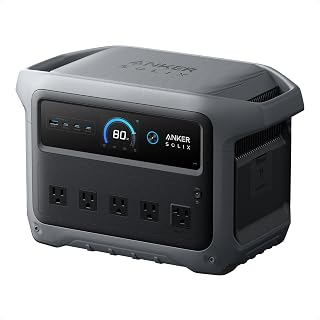
The 2000W surge capacity sets this apart for home backup, allowing it to start and run power-hungry tools like sump pumps or window AC units that other stations can't handle. Solar charging capability means you can sustain power through multi-day outages, and the robust output keeps essential circuits operational when your home loses grid connection.
Pros
- 2,000W continuous output
- 49-minute wall recharge
- 10ms UPS switchover
- Up to 600W solar input
Cons
- 1,024Wh capacity suits selected loads
- 1.8-hour solar charging requires optimal conditions
Rapid recovery is especially valuable in a home backup plan, and the SOLIX C1000 Gen 2 is built around it. Its 1,024Wh battery and 2,000W continuous output offer more headroom than smaller stations for selected household loads, while its 3,000W maximum power accommodates higher startup demand. Nine power outlets give a family room to keep several devices connected instead of constantly swapping plugs. When utility power returns, HyperFlash charging can take the station to full in 49 minutes from a wall outlet using 1,600W input. For equipment that should not lose power, the stated 10ms UPS switchover is a central advantage. The LiFePO4 battery is designed to retain at least 80% capacity after 4,000 charge cycles, which suits a station kept ready for recurring outages rather than occasional trips. At 11.3 kg, with side handles and a 15.1 by 8.2 by 9.6-inch footprint, it remains practical to relocate around the house. Solar input of up to 600W provides a second recharge route and can fill it in 1.8 hours under optimal conditions. Its 1,024Wh capacity still makes it a selective-load backup choice, not a substitute for permanent whole-home power.
Buy it if you want a home backup station that can be recharged quickly after power returns and can protect interruption-sensitive equipment with a 10ms UPS switchover. It suits households powering a deliberately chosen group of devices and those that may use wall and solar recharging. Skip it if your goal is permanent, automatic whole-home coverage or long-duration operation of numerous heavy loads. It is also a weaker match for anyone who does not need rapid recharging, UPS support, or a portable unit that can be moved room to room.
Capacity: 1,024Wh LiFePO4 battery
Output: 2,000W continuous, 3,000W peak
Ports: 10 total outputs
Wall Recharge: 1,600W input, 49 minutes to full
Solar Input: Up to 600W at 60V maximum, 1.8 hours to full
UPS Switchover: 10 milliseconds
Dimensions: 15.1L x 8.2W x 9.6H inches
Weight: 11.3 kg (24.9 lbs)
Battery Cycles: 4,000+ cycles with minimum 80% retention
Warranty: 5 years
Colors Available: Gray
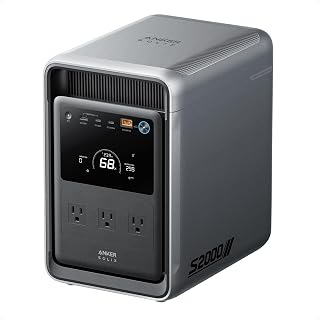
The 2,010Wh capacity provides substantial runtime for refrigerators, modems, and medical equipment during prolonged outages, while 1,500W output covers most household essentials. Its combination of portability and high capacity makes it practical to move between rooms as needs shift, and the compact design stores easily when not in active emergency use.
Pros
- 2,010Wh capacity with 1,500W running output
- Sub-10ms UPS switchover
- Stated 35-hour refrigerator runtime
- Six recharging methods, including 400W solar input
Cons
- No 12V DC port
- Runtime depends on appliance use and conditions
Home backup is most useful when a power station can stay connected, switch promptly, and avoid wasting stored energy. The Anker SOLIX S2000 is built around those concerns, pairing a 2,010Wh battery with 1,500W of running output and 3,000W of starting power. Its sub-10ms UPS switchover is intended to keep connected equipment running through a grid transition, while the 6W idle draw supports a stated 35-hour refrigerator runtime. For an outage kit, its 35.7-pound, 8.2 by 11.1 by 12.7-inch form makes a 2kWh-class unit less awkward to place or move than larger alternatives. Eight outlets, arranged across the front and rear, help keep household connections organized. Homeowners also get six charging routes, including AC, generator, car-outlet, and up to 400W solar input. The LFP battery is rated for 10,000 charge cycles and a 15-year lifespan, so this is aimed at recurring backup duty rather than one-off emergency use. Its stated home-backup role and ability to support refrigerators, freezers, medical equipment, and CPAP machines make it a focused pick for essential loads.
Capacity and Output: 2,010Wh LiFePO4 battery, 1,500W continuous output, 3,000W peak output
Battery Technology: 314Ah LFP cells, 10,000 cycle lifespan, 15-year warranty
Dimensions: 8.19L x 11.1W x 12.7H inches
Weight: 35.7 pounds
Outlets: 8 total (front and rear configuration)
Charging Options: AC input, solar (up to 400W), generator, car outlet, alternator charger
UPS Switchover: Less than 10 milliseconds
Idle Power Draw: 6W
Color: Black
Model: AS220
Warranty: 5 years
Buy the S2000 if home backup means keeping a refrigerator and selected essentials supplied during outages, with UPS continuity for connected equipment. It suits people who value a compact, 35.7-pound 2,010Wh station, several recharging choices, and a long-life LFP battery for repeat emergency use. Skip it if your setup relies on a 12V DC port for specialized RV gear or other compatible devices. It is also not the natural choice for anyone who only needs a small station to recharge phones and tablets.

This compact unit delivers 292Wh capacity and 300W output, making it ideal for keeping essential electronics alive during short outages. The 4-hour recharge time means it recovers quickly between storms, and the multiple output options (10A AC, 2.4A and 3A USB) let you charge phones, tablets, and small appliances simultaneously without needing adapters or hubs.
Pros
- 7.5-pound compact design
- Six-device charging capability
- 100W USB-C PD port
- Over 4,000 rated charge cycles
Cons
- Not designed for refrigerators
- 300W rated output limits appliances
Not every home-backup plan needs a large station for major appliances. The Jackery Explorer 300 fills the smaller role: a 292Wh, 300W unit for keeping phones, tablets, laptops, cameras, and similar electronics available when the power is out. Its 7.5-pound compact form is particularly practical as a grab-and-go layer in an emergency kit, rather than a substitute for a full household backup system. The connection mix gives it flexibility around a room or in a temporary work setup. There are two AC outlets, a 100W USB-C PD port, two USB-A ports, and a 120W car charging port, supporting up to six devices at once. The 300W rated output and 600W peak are suited to smaller electronics, but the unit is specifically not meant for refrigerators, air conditioners, or high-wattage tools. Recharging takes about three to four hours by AC adapter; with a compatible 100W solar panel, it can reach 80% in 2.8 hours. Its LiFePO4 battery is rated for more than 4,000 cycles before reaching 70% capacity, making it a durable companion to a broader home outage plan.
Choose the Explorer 300 for a home emergency kit centered on personal electronics, a laptop, or small devices, especially if easy carrying matters. At 7.5 pounds, it is suited to moving between rooms or taking along if an outage changes your plans. Skip it when your backup priorities include a refrigerator, air conditioner, or high-wattage tools. A 292Wh capacity and 300W rated output place it firmly in the small-device category, not the main source of household outage power.
Capacity: 292Wh (LiFePO4 battery)
Weight: 7.1-7.5 lbs
Dimensions: 15.43in D x 9.92in W x 11.89in H
AC Output: 2 outlets, 110V, 300W continuous (600W peak surge)
USB Ports: USB-C PD 100W, USB-A 2.4A (x2)
Car Port: 120W 12V output
Charging Time: Approximately 4 hours AC, 2.8 hours with 100W solar panel
Battery Cycles: 4,000+ before reaching 70% capacity
Warranty: 2 year manufacturer
Model: JE-300E

Pros
- Dual-fuel gasoline and propane operation
- 4,000-watt startup capacity
- CO Sensor and Cold Start Technology
- Relatively light with useful outlet variety
Cons
- Running power falls to 2,700W on propane
- Requires fuel and load management
Home backup often depends as much on fuel flexibility and manageable storage as raw wattage. This Champion inverter generator gives households two fueling paths, gasoline or propane, and produces 3,000 running watts on gas or 2,700 on propane, with 4,000 watts available for startup demand. That makes it a practical option for keeping selected essentials supplied during an outage, including refrigerators, TVs, computers, and HVAC systems, provided the active load is managed. For a backup unit that may need to be moved quickly, its weight of just under 55 pounds, carrying handle, and fully assembled design matter. The recoil-start system uses an EZ Start Dial, while Cold Start Technology supports operation in cold conditions. A CO Sensor adds a relevant safety feature, and its 64 dBA rating at 23 feet suits residential settings better than many conventional generators. The 30A RV outlet, household outlet, and 12V automotive outlet broaden connection options. A 1.54-gallon tank and up to 10 hours on gasoline or 25 hours on propane give homeowners useful choices when an outage stretches beyond a few hours.
The Champion 4000-Watt Dual Fuel Generator is purpose-built for RV and camping applications. With its RV-ready 30A TT-30R outlet, it directly powers most travel trailers and motorhomes, providing air conditioning, refrigeration, and comfort systems during dry camping or at RV parks without full hookups.
The propane option is a game-changer for extended camping trips, delivering up to 25 hours of runtime at 25% load. Users report successfully running one 15,000 BTU rooftop air conditioner for full days, making it ideal for hot-weather camping. The lightweight design and carry handle make it practical to transport and position for optimal exhaust direction away from your RV and campsite.
For RV owners considering dual-unit setup for increased capacity, the optional parallel kit enables connection of two Champion inverters, providing greater power reserves for simultaneous appliance operation or extended off-grid capability.
Output Power: 4000 starting watts, 3000 running watts on gasoline, 2700 running watts on propane. Clean power output under 3% THD ensures safe operation with sensitive electronics.
Fuel & Runtime: 1.54-gallon gasoline tank provides up to 10 hours at 25% load. Compatible with standard 20-pound propane tanks for extended runtime up to 25 hours. 149cc engine with 4-stroke design, cold start technology for freezing conditions.
Outlets & Connectivity: 120V 25A TT-30R RV outlet, 120V 20A household duplex outlet, 12V automotive-style outlet, plus parallel outlets for unit expansion.
Noise Level: 64 dBA at 23 feet, classified as ultra-quiet for generator category. Economy Mode reduces noise, fuel consumption, and engine speed during partial loads.
Safety & Warranty: CO Shield monitors dangerous carbon monoxide levels with automatic shutdown. Low oil shut-off protection included. 3-year limited warranty plus free lifetime technical support from Champion.

Pros
- 2,048Wh capacity expandable to 6kWh
- 2,400W continuous and 3,400W peak output
- Rated as quiet as 30dB
- Fifteen outlets with app integration
Cons
- Weighs 23kg
- Full 6kWh capacity needs added battery modules
An effective home-backup station must cover meaningful loads without filling the house with generator noise or fumes. The EcoFlow DELTA 2 Max starts with 2,048Wh of capacity and 2,400W continuous output, with 3,400W peak power through X-Boost mode, positioning it for serious outage preparation rather than occasional device charging. It is specified for home backup and can expand to 6kWh with additional battery modules, offering a path beyond its starting capacity. Quiet operation is a central advantage indoors. The unit is rated as low as 30dB, and its listed features include no fumes, no noise, and no maintenance. Fifteen outlets allow numerous connections, while app integration enables remote monitoring and automation. Restoring stored energy can be fast too, reaching 80% in 43 minutes when solar and AC input are combined. The LiFePO4 battery is rated for 3,000 cycles before declining to 80% capacity and has a stated 10-year lifespan. At 23kg, it makes the most sense as a station placed for backup duty and moved occasionally, not as a lightweight grab-and-go unit. For homes seeking quiet, expandable electricity during outages, those tradeoffs are well aligned.
Capacity and Power: 2048Wh capacity, 2400W continuous output, 3400W peak output with X-Boost mode, 15 outlets total.
Battery Technology: LiFePO4 chemistry with 3000 charge cycles to 80% capacity, 10-year lifespan, 5-year extended warranty included.
Charging Options: AC charging (1.1 hours to 80%), solar input up to 1000W, vehicle charging support. Combined input enables 43-minute 80% charge.
Physical Specs: 2048 watt-hours, 23kg weight, dimensions 12.2in x 9.7in x 20in, black and grey color, 60Hz frequency.
Operation: Ultra-quiet 30dB operation, app-based management, advanced battery management system with real-time voltage, current, and temperature monitoring, no fumes or maintenance required.
Buy the DELTA 2 Max if you want a home-centered backup station with 2,048Wh at the outset and the option to build capacity up to 6kWh. It fits people who value 2,400W continuous output, a large set of outlets, quiet 30dB operation, and app-based monitoring. Skip it if you need a light unit to carry frequently, since it weighs 23kg. It is also a less direct fit for anyone who does not need expansion or a larger 2kWh-class starting capacity.

Pros
- 3,072Wh capacity and 3,600W continuous output
- Sub-10ms UPS switching
- 25dB X-Quiet 3.0 operation
- Four recharge options, including solar
Cons
- 72.1 pounds to move
- No battery expansion slots
Home backup is less about carrying a battery outdoors and more about keeping essential circuits and household gear running when utility power fails. The EF ECOFLOW DELTA 3 Ultra brings a 3,072Wh battery and 3,600W continuous output to that role, with up to 7,200W surge power for demanding startup loads. Its sub-10ms UPS function is especially relevant for outage-sensitive equipment such as a PC, WiFi router, and medical equipment, switching to battery power quickly when the grid drops. It also addresses two common backup concerns: noise and replenishment. X-Quiet 3.0 operation is rated at 25dB, while charging can come from solar, a wall outlet, a car input, or a generator. The included XT60 solar cable supports the solar-ready setup. LiFePO4 chemistry is described as suitable for 10 years of daily use, backed by thermal protection and a five-year warranty. At 72.1 pounds, it is not a grab-and-go option, but its wheels and pull handle help position it where backup power is needed. Three outlets and 120V output make it a focused, portable emergency-power solution rather than a whole-home replacement.
Capacity and Power: 3072Wh battery capacity with 3600W continuous output (7200W surge power)
Battery Technology: LiFePO4 with EV-grade CTC structure and 24/7 protection system, rated for 10 years of daily use
Charging Methods: Wall outlet (120V), solar panels via XT60 cable, 12V car input, or EcoFlow Smart Generator
Outlets and Ports: 4x 20A outlets, 1x 30A RV outlet, 4x USB ports (including high-power options)
Performance Features: Less than 10ms UPS switchover, 25dB noise level, X-Quiet 3.0 and X-Stream technologies
Physical Specs: 24.6 x 12.9 x 15.6 inches, 72.1 lbs with integrated wheels and pull handle
Warranty: 5-year manufacturer coverage
Buy it if your outage plan calls for substantial battery capacity, high continuous output, and fast UPS support for essential electronics, while keeping noise low inside or near the home. It suits homeowners who can use solar, wall, vehicle, or generator charging and who are comfortable moving a 72.1-pound unit with wheels and a pull handle. Skip it if you need a lighter unit for frequent carrying, want to expand capacity later, or require a stationary whole-home system instead of a portable power station with three outlets.

Pros
- 3584Wh capacity runs a 3-person household over 2 weeks
- Expandable up to 43kWh by linking multiple units
- Full recharge in 2 hours with hybrid AC plus DC input
- Smaller and lighter than competing 3.6kWh stations, with wheels for mobility
Cons
- At 77.2 pounds, still needs two hands or wheels to move
- Fastest charging requires compatible solar or hybrid charging gear
When you're building a home backup plan, capacity and recovery time matter more than any single spec sheet number. The HomePower 3600 Plus brings 3584Wh to the table, enough to keep a 3-person household running for over two weeks on its own, and it doesn't stop there since multiple units link together for up to 43kWh if your home's needs grow. For backup specifically, the ceramic membrane LFP battery is rated for 6,000 cycles and tolerates temperature extremes from -4°F to 302°F, so it holds up through long outages and harsh conditions alike. Recovery speed is where it really earns its place on a backup shortlist: hybrid AC plus DC input gets it to full charge in just 2 hours, meaning you can top off between outages or during a lull in a storm. Despite the 3600W output, Jackery kept the footprint smaller and lighter than comparable units, with wheels and a telescopic handle so it's not stuck in one room. For whole-home resilience planning, this is a station built to scale with you.
Capacity: 3584Wh base, expandable to 21kWh per unit or 43kWh with multiple units
Power Output: 3600W AC (7200W in parallel configuration)
Voltage: 120V and 240V dual voltage support
Battery Type: Ceramic membrane LFP cells
Cycle Life: 6,000+ cycles with 10-year lifespan
Operating Temperature: -4°F to 302°F
Charging Options: Hybrid AC plus DC (2 hours), AC only (2.5 hours), solar (4 hours), gas generator (2.5 hours)
Weight: 77.2 pounds
Dimensions: 15.2 x 12.2 x 19.3 inches
Outlets: 2 outlets plus built-in cables
Warranty: 5-year manufacturer coverage
Best for homeowners who want a backup system that can grow, starting with one unit and adding more as budget or needs expand. Multi-person households with higher power draw will appreciate the long runtime and fast recharge. Skip it if you live alone with modest power needs or want a lightweight, single-purpose unit, since the 77.2-pound weight and expansion-focused design are overkill for minimal backup requirements.
Buying Guide: How to Choose a Home Backup Power Station
Match continuous output to the appliances you will run together
Start with continuous AC output, not surge output. Continuous wattage is the load a station can sustain, while a higher surge figure helps a refrigerator compressor or pump start. Add the running wattage of everything you expect to operate at once, then leave a sensible cushion for cycling appliances.
The Anker SOLIX C1000 Gen 2 supplies 2,000W of continuous output from a 1,024Wh battery, making it a strong fit for a refrigerator plus networking gear and smaller essentials. For heavier loads, the EF ECOFLOW DELTA 2 Max reaches 2,400W and offers 15 outlets. Keep delicate drives disconnected during an outage when possible, especially if you use an external SSD for gaming and large game libraries.
Choose capacity for the outage length, not just the device wattage
Watt-hours indicate how much stored energy a station has, and they shape runtime more than output watts do. A roughly 1kWh model can be practical for a short outage when you prioritize a refrigerator, lights, router, phones, and a laptop. It is less suitable for running high-draw heating appliances for extended periods.
For longer refrigerator backup, the Anker SOLIX S2000 packs 2,010Wh and uses a low idle draw to extend usable runtime. The EF ECOFLOW Delta 3 Ultra offers 3,072Wh with 3,600W output, while the Jackery HomePower 3600 Plus starts at 3,584Wh and supports major capacity expansion. Actual runtime still depends on ambient temperature, appliance cycling, and the total connected load.
Prioritize fast UPS switchover for computers and connected equipment
If an interruption could disrupt remote work, networking equipment, or a desktop computer, look for a listed UPS mode with a very short transfer time. The Anker SOLIX C1000 Gen 2, EF ECOFLOW DELTA 3 Classic, Anker SOLIX S2000, and EF ECOFLOW Delta 3 Ultra specify switchover in 10ms or less for supported devices.
UPS functionality is useful for individual plugged-in electronics, but it is not a substitute for a properly installed whole-home transfer system. Check outlet placement as well. The UDPOWER S1200 offers five AC outlets and dual 100W USB-C ports, while the S2000 separates outlets across its front and rear panels. A steady power source also matters for a desk built around one of the best monitors for competitive FPS gaming.
Plan your recharge path before the outage starts
Fast wall charging helps you prepare when severe weather is approaching. The Anker SOLIX C1000 Gen 2 can reach a full charge in as little as 49 minutes when its app-enabled high-speed mode is active, while the EF ECOFLOW DELTA 3 Classic can reach 80% in 45 minutes through AC charging.
Solar input matters once an outage lasts beyond a day. The C1000 Gen 2 accepts up to 600W of solar, and the DELTA 2 Max supports up to 1,000W of solar input plus AC charging for rapid replenishment. Jackery’s Explorer 1000 v2 works only with compatible Jackery solar panels, so confirm panel compatibility before building your setup. For a mobile work kit, pair your backup plan with a portable SSD for Mac that keeps important files close at hand.
Final Thoughts
For most households that need a portable, high-output option with quick recharge and UPS support, the Anker SOLIX C1000 Gen 2 Portable Power Station is a balanced choice. If your priority is substantially longer backup for major essentials and room to expand, the Jackery HomePower 3600 Plus Power Station, 3584Wh is the more capable fit.
Frequently Asked Questions
What size power station do I need to keep a refrigerator running?
Start with your refrigerator’s running wattage, then allow extra headroom for compressor startup. A 1,000Wh-class station can cover a limited set of essentials for a shorter outage, but a 2kWh or larger model gives you more breathing room. The Anker SOLIX S2000 is designed around extended fridge backup, though your real results will vary with the refrigerator model, room temperature, and how often you open the door.
Can a portable power station run an entire house?
Most portable stations are intended to power appliances directly from their built-in outlets, not to energize a home’s wiring without the appropriate equipment. Larger systems such as the Jackery HomePower 3600 Plus and EF ECOFLOW Delta 3 Ultra can handle many essentials, but central HVAC, electric ranges, and other large loads may require a dedicated transfer setup. Consult a qualified electrician before connecting backup power to household circuits.
Is UPS mode important for a home backup battery?
UPS mode is especially valuable for computers, routers, modems, and similar electronics that can be affected by even a brief interruption. A fast switchover helps keep these devices operating while utility power drops. It is a smart feature for a workstation with a 32-inch 4K monitor, although you should still save work regularly and follow the device manufacturer’s power guidance.
Should I choose a battery power station or a dual-fuel generator in 2026?
A battery station is quieter, has no exhaust at the point of use, and is usually more convenient for indoor electronics when used according to its instructions. The Champion 4000-Watt Dual Fuel RV Ready generator can provide longer operation as long as fuel is available, but it must always run outdoors and well away from windows, doors, and vents because of carbon monoxide risk. For gaming and home-office gear, a battery station pairs naturally with a reliable budget 1440p monitor and other low-to-moderate draw devices.




Write Your Review
No reviews yet. Be the first to share your experience!